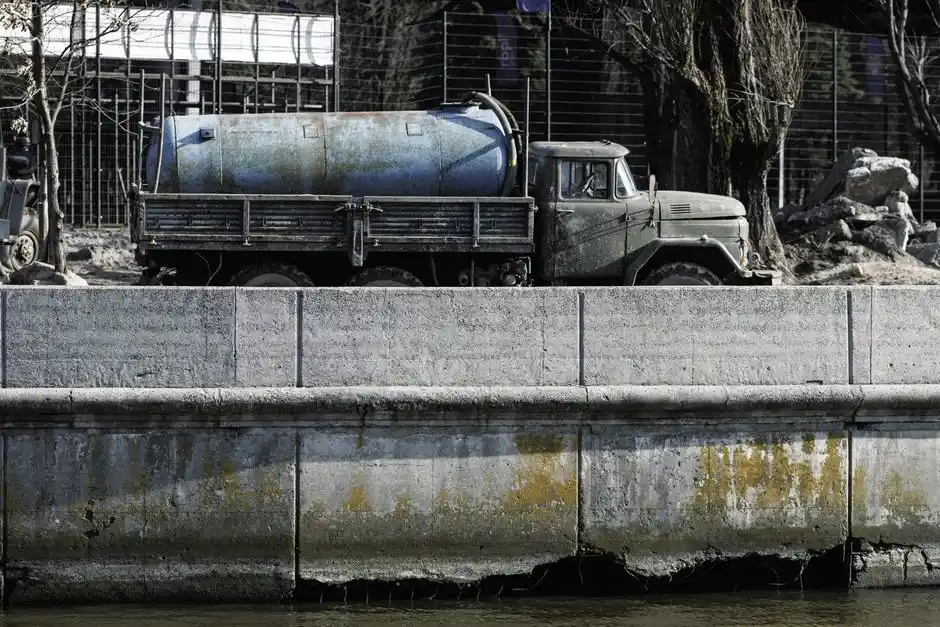
Most Macon homes need their septic tank pumped every 3 to 5 years. If you have a 1,000-gallon tank and two people living in the house, you can stretch that to 5 years; a family of five with a 1,000-gallon tank should be pumping closer to every 2 to 3 years. That is the whole answer. Everything below explains how we arrive at that number for your specific property, what it costs in Macon in 2026, and the warning signs that mean you are already past due.
The short answer for Macon homes
Septic tank pumping frequency in Macon depends on three things: tank size, how many people live in the house, and how much water your household sends down the drain each day. The EPA's baseline rule is simple - a tank should be pumped when the combined sludge and scum layers take up 25 to 33 percent of the tank's volume. For a 1,000-gallon tank, that is 250 to 330 gallons of solids. You cannot see that from the yard. You measure it with a pole through the inspection port.
Here is the practical breakdown we use when we quote a pumping schedule for a Macon address:
- 1-2 people, 1,000-gallon tank: every 4 to 5 years
- 3 people, 1,000-gallon tank: every 3 to 4 years
- 4-5 people, 1,000-gallon tank: every 2 to 3 years
- 6+ people or a garbage disposal: every 1.5 to 2 years
- 1,250-gallon tank or larger: add roughly one year to each range above
A garbage disposal is the single biggest schedule-shortener in a Macon kitchen. Food scraps that go down the disposal add 40 to 50 percent more solids to the tank than a household without one. If you run a disposal daily, treat your tank as if one extra person lives in the house.
How often should you pump your septic tank in Macon GA?
How often should you pump your septic tank in Macon GA is a question with a local answer, not a national one. Macon sits on a mix of red clay and sandy loam, and that soil profile changes how fast your drain field absorbs effluent. In heavy clay areas - much of East Macon and older parts of Downtown Macon - the drain field drains slowly, which means the tank fills with liquid faster and the sludge layer compresses sooner. We often recommend pumping every 3 years in those neighborhoods rather than 5.
In sandier ground - parts of North Macon and Wesleyan Woods - the field drains quickly and the tank can go the full 4 to 5 years on the same household size. The tank itself does not care. The soil under the drain field does.
If you have never had the tank pumped and you do not know its size, the first step is a septic tank inspection macon GA. We measure the sludge and scum layers, confirm the tank capacity, and give you a real number instead of a guess. A 30-minute inspection costs far less than a failed drain field.
Why Macon's soil and weather change the schedule
Macon gets roughly 46 inches of rain a year, and most of it lands between December and March. That matters because a saturated drain field cannot accept effluent. When the ground is soaked, wastewater backs up into the tank, the tank fills faster, and solids get pushed toward the outlet. A wet winter can effectively shorten your pumping interval by six months to a year.
Summer is the opposite problem. July and August in Macon push soil temperatures into the 80s and 90s at the surface, and the bacteria in your tank work faster in warm conditions. That is good for digestion, but it also means more sludge accumulates in a shorter window. The net effect across a full year is that Macon tanks accumulate solids at a slightly faster rate than tanks in cooler climates.
Two more local factors:
- Older homes. A large share of Macon's housing stock was built before 1980, when 750- and 1,000-gallon tanks were standard. Those tanks fill faster than the 1,250-gallon tanks going into new construction.
- Tree roots. Pines and oaks across middle Georgia send roots toward the moisture in drain field lines. Root intrusion does not change pumping frequency directly, but it does cause the backups that people mistake for a full tank.
If you are in one of the older neighborhoods and you are not sure what is under the yard, a septic tank installation North Macon GA assessment can tell you whether you are maintaining an aging system or replacing it.
Signs you are already overdue
The first sign is usually slow drains - not one sink, but every drain in the house at once. When multiple fixtures slow down together, the problem is in the tank or the field, not the pipe. Here is what we tell Macon homeowners to watch for:
- Gurgling toilets. A toilet that gurgles after you run the washing machine is pulling air through the tank because the inlet is partially blocked.
- Sewage smell in the yard. If you catch a whiff near the tank lid or the drain field, the tank is likely full and pushing wastewater into the field before it has been properly treated.
- Standing water over the drain field. Wet, spongy ground in the field area - especially in dry weather - means the field is not absorbing.
- Backups in the lowest fixture. A basement floor drain or a first-floor shower is usually the first place sewage appears when the tank is full.
- Lush green stripes in the grass. Bright green lines over the drain field sound harmless. They mean effluent is pooling just below the surface.
Any two of those signs together means you should stop using water heavily and get the tank pumped. Waiting a week rarely saves money. Waiting a month usually costs a drain field.
What septic tank pumping costs in Macon in 2026
Typical 2026 pricing for septic tank pumping in Macon runs $350 to $600 for a standard 1,000- to 1,250-gallon residential tank. That range covers the pump-out, hauling, and disposal. A few things move the number:
- Tank size. A 1,500-gallon tank runs $500 to $750.
- Lid access. If the lid is buried under 12 inches of sod, expect a $75 to $150 locate-and-expose charge.
- Distance from the truck. More than 100 feet of hose adds $50 to $100.
- Condition of the tank. A cracked baffle or a damaged outlet tee adds repair cost on top of the pump-out.
How long does septic tank pumping take in Macon? Most residential pump-outs take 45 to 90 minutes once we are on site. A straightforward job with an exposed lid is closer to 45 minutes. A buried lid, a long hose run, or a tank that needs the baffle replaced pushes it toward two hours.
One thing we do not do is quote a price over the phone and then change it in the driveway. We confirm the tank size and lid location, then give you one number before we start. If you want that number locked into a recurring schedule, our septic maintenance plans macon GA spread the cost across the year and put you on a reminder cycle so you never guess again.
What happens if you don't pump your septic tank in Macon
What happens if you don't pump your septic tank in Macon is not a mystery - it is a sequence. First, the sludge layer rises until it reaches the outlet tee. Then solids flow into the drain field. Then the field clogs. Once the field is clogged, pumping the tank no longer fixes the problem, because the damage is in the soil, not the tank.
A clogged drain field in Macon typically means one of two things: a drain field repair macon GA job to replace the failed lines, or a full system replacement. Drain field repair runs $3,000 to $8,000 depending on how much of the field has to be rebuilt. A complete replacement runs $10,000 to $25,000. Compare that to a $400 pump-out every few years and the math is not close.
There is also the health side. Untreated sewage surfacing in a yard carries bacteria and parasites. If you have kids or dogs using that yard, a failed system is a real risk, not just an expensive one.
Common mistakes we see on Macon properties
The most common mistake is treating the tank like a garbage can. Flushable wipes are the worst offender - they do not break down, and they wrap around the baffle and the pump. We pull wipes out of Macon tanks on almost every job.
Other mistakes we see regularly:
- Pouring grease down the drain. Cooking grease cools and hardens in the tank. It becomes scum, and scum is what fills the tank first.
- Using the toilet as a trash can. Paper towels, cat litter, dental floss, and cotton swabs all go into the tank and stay there.
- Dumping harsh chemicals. Bleach, drain cleaner, and antibacterial soaps kill the bacteria that digest your waste. A dead tank fills faster.
- Ignoring the effluent filter. If your system has one, it needs rinsing every 6 to 12 months. A clogged filter causes the same backups as a full tank. We handle that with effluent filter cleaning macon GA on the same visit as the pump-out.
- Driving over the drain field. A pickup truck parked on the field compacts the soil and crushes the lines. Keep vehicles off it.
None of these are complicated. They are just easy to forget until something backs up.
When to call a professional
Call us when you see two or more of the warning signs above, when it has been more than five years since the last pump-out, or when you are buying a home with a septic system and no records. We handle the pump-out, measure the sludge and scum layers, and check the baffles and filter while we are there. If something else is wrong - a cracked tank, a failing pump, a clogged field - we tell you on the spot and give you a straight price to fix it.
Macon Septic Tank Pros works across Macon and the surrounding middle Georgia area. We are a state-licensed septic contractor, and we do not subcontract the pump-out to a third party. The crew that arrives is our crew.
Frequently Asked Questions
How often should you pump your septic tank in Macon GA?
Every 3 to 5 years for most Macon homes. A two-person household with a 1,000-gallon tank can go 4 to 5 years. A family of five should pump every 2 to 3 years. Heavy clay soil in older neighborhoods shortens the interval by about a year.
How much does septic tank pumping cost in Macon?
In 2026, expect $350 to $600 for a standard 1,000- to 1,250-gallon residential tank. Larger tanks, buried lids, and long hose runs add $50 to $150 each. We confirm the price before we start pumping.
What happens if you don't pump septic tank in Macon?
Solids flow into the drain field and clog the soil. Once that happens, pumping the tank no longer fixes the problem. Drain field repair runs $3,000 to $8,000, and a full replacement runs $10,000 to $25,000.
Who pumps septic tanks in Macon GA?
Macon Septic Tank Pros pumps residential and commercial tanks across Macon and middle Georgia. We are state-licensed, we handle the pump-out and disposal ourselves, and we check the baffles and effluent filter on the same visit.
How long does septic tank pumping take in Macon?
Most residential pump-outs take 45 to 90 minutes on site. An exposed lid and a short hose run put you near 45 minutes. A buried lid or a long hose run pushes it closer to two hours.
Get help with septic tank installation in macon
If your tank is overdue, or you are not sure when it was last pumped, we can tell you in one visit. We pump, inspect, and give you a schedule you can actually follow.
Call Macon Septic Tank Pros at 478 245 5262 to book a pump-out or a septic inspection in Macon.